
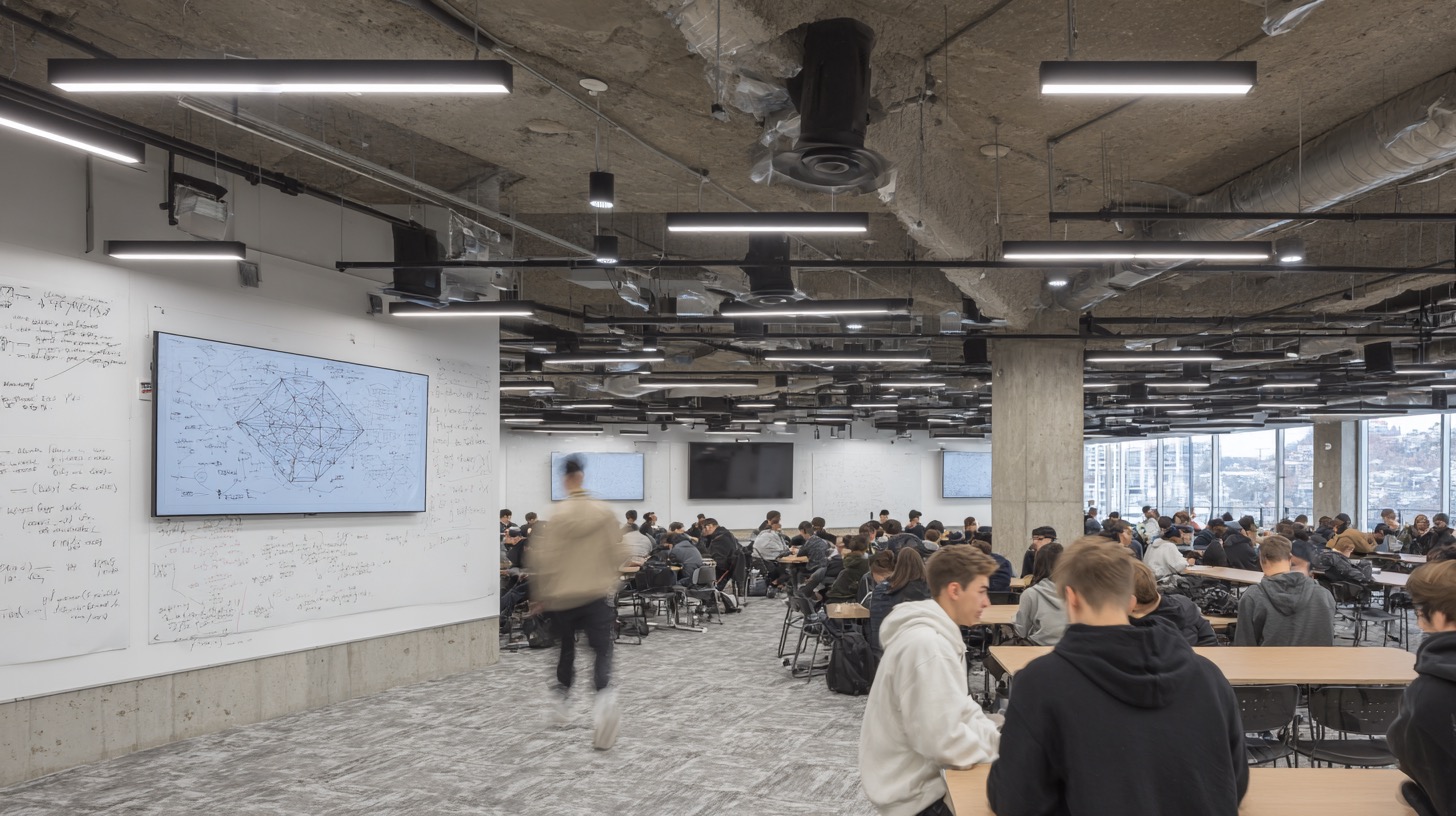
Research & Educational Programs
Advancing complexity science through innovative research initiatives, world-class educational programs, and strategic international collaborations that shape the future of scientific discovery.
Flagship Research Programs
Large-scale, transformative research initiatives that push the boundaries of complexity science and address fundamental questions about emergence, intelligence, and adaptation in complex systems.
Emergent Intelligence in Complex Systems Initiative
ActiveA transformative research program investigating how intelligence emerges from the collective behavior of simple components across biological, artificial, and social systems. This initiative seeks to unify theories of emergence, computation, and adaptation to develop a comprehensive science of complex intelligence.
Research Impact
15 Nature/Science papers, 3 patents, 2 startup companies
Key Breakthroughs
- •Discovered universal scaling laws in collective decision-making
- •Developed first predictive theory of swarm intelligence phase transitions
- •Created bio-inspired AI achieving human-level performance on complex reasoning tasks
Research Objectives
Key Partners
Collaboration Opportunities
Join our cutting-edge research program and contribute to breakthrough discoveries in complexity science.
Contact Principal InvestigatorsClimate-Social Tipping Points Observatory
ActiveA global research observatory investigating the coupled dynamics of climate and social systems, with focus on understanding and predicting cascading tipping points that could reshape Earth's future. This program combines Earth system modeling with social network dynamics to address humanity's greatest challenge.
Research Impact
Direct input to IPCC AR7, policy adoption by 12 countries
Key Breakthroughs
- •Identified 23 critical climate-social tipping elements globally
- •Developed first integrated model of Earth-human system dynamics
- •Predictions of Amazon tipping point confirmed by satellite observations
Research Objectives
Key Partners
Collaboration Opportunities
Join our cutting-edge research program and contribute to breakthrough discoveries in complexity science.
Contact Principal InvestigatorsQuantum Biology and Information Networks
ActivePioneering research at the intersection of quantum physics and biology to understand how living systems exploit quantum mechanical phenomena for information processing, energy transfer, and adaptive behavior. This program aims to revolutionize our understanding of life itself and inspire quantum technologies.
Research Impact
3 breakthrough Nature papers, quantum computing applications
Key Breakthroughs
- •First demonstration of quantum coherence in neural microtubules
- •Developed quantum-enhanced genetic algorithms with exponential speedup
- •Created biological quantum sensors achieving fundamental precision limits
Research Objectives
Key Partners
Collaboration Opportunities
Join our cutting-edge research program and contribute to breakthrough discoveries in complexity science.
Contact Principal InvestigatorsEducational Excellence
World-class educational programs that train the next generation of complexity science leaders, from intensive summer institutes to executive education and prestigious doctoral fellowships.
International Summer Institute in Complexity Science
Elite residential program bringing together the world's most promising complexity science researchers. Modeled after prestigious institutes like Woods Hole and Cold Spring Harbor, with focus on breakthrough research methodologies and interdisciplinary collaboration.
Duration
4 weeks intensive
Participants
36 selected worldwide
Next Session
June 10 - July 5, 2025
Program Prestige
Top 1% acceptance rate, alumni at MIT, Stanford, Harvard
Investment
Full scholarships including travel and accommodation
Core Curriculum
- Advanced network dynamics and critical phenomena
- Computational approaches to emergence and self-organization
- Information theory and complexity in biological systems
- Machine learning and artificial intelligence for complex systems
- +2 additional specializations
Distinctive Features
Executive Program in Complex Systems Leadership
Exclusive program for C-level executives, government leaders, and senior researchers seeking to apply complexity science principles to organizational strategy, innovation, and decision-making in uncertain environments.
Duration
1 week intensive + 6-month project
Participants
24 senior executives
Next Session
September 14-21, 2025
Program Prestige
Participants from Google, McKinsey, World Bank, NATO
Investment
$25,000 per participant (corporate rates available)
Core Curriculum
- Complexity theory for organizational transformation
- Network effects and ecosystem strategy
- Adaptive leadership in complex environments
- Risk management and resilience in interconnected systems
- +2 additional specializations
Distinctive Features
PhD Fellowship in Interdisciplinary Complexity Science
Highly selective doctoral fellowship program designed to train the next generation of complexity science leaders. Fellows work across traditional disciplinary boundaries on grand challenges at the intersection of physics, biology, computer science, and social sciences.
Duration
4-5 years
Participants
8 fellows annually
Next Session
Applications due: January 15, 2025
Program Prestige
2% acceptance rate, graduates at top universities worldwide
Investment
Fully funded with $55,000 annual stipend
Core Curriculum
- Thesis research in cutting-edge complexity science
- Interdisciplinary methodologies and theoretical frameworks
- Advanced mathematics and computational methods
- Scientific communication and public engagement
- +2 additional specializations
Distinctive Features
Application Guidelines
Eligibility Requirements
PhD students, postdocs, faculty, and professionals with advanced quantitative background. Strong mathematics, physics, or computational science foundation required. Letters of recommendation from recognized experts in complexity science preferred.
Application Timeline
Applications open November 1st annually. Priority deadline: January 15th for summer programs. Final decisions communicated by March 1st. Rolling admissions for executive programs. Early application strongly encouraged due to competitive selection.
Financial Support
Merit-based fellowships cover full program costs including accommodation and meals. International travel grants available. Need-based assistance for developing country participants. Corporate sponsorships available for executive programs.
Strategic Collaborations
Leading global initiatives that leverage complexity science to address grand challenges through strategic partnerships with premier institutions, international organizations, and industry leaders.
Global Complexity Science Consortium
Strategic alliance of leading complexity science research centers dedicated to advancing theoretical foundations and collaborative research initiatives across continents.
Measurable Impact
127 collaborative publications, 23 joint patents, 8 spin-off companies
Key Initiatives
Key Partner Institutions
Join This Initiative
Explore partnership opportunities and contribute to this transformative collaboration.
Contact Partnership TeamUN Sustainable Development Goals Complexity Initiative
Multi-stakeholder initiative applying complexity science methodologies to accelerate progress on UN Sustainable Development Goals through systems thinking and network-based interventions.
Measurable Impact
Policy adoption in 34 countries, $1.2B in leveraged funding, 15M lives impacted
Key Initiatives
Key Partner Institutions
Join This Initiative
Explore partnership opportunities and contribute to this transformative collaboration.
Contact Partnership TeamCorporate Complexity Leadership Alliance
Exclusive executive consortium focused on applying complexity science principles to organizational transformation, innovation management, and strategic decision-making in uncertain business environments.
Measurable Impact
$450M in documented ROI, 15 breakthrough innovations, 2000+ executives trained
Key Initiatives
Key Partner Institutions
Join This Initiative
Explore partnership opportunities and contribute to this transformative collaboration.
Contact Partnership TeamPartner With Us
Join our global network of institutions and organizations applying complexity science to address humanity's most pressing challenges through collaborative innovation.